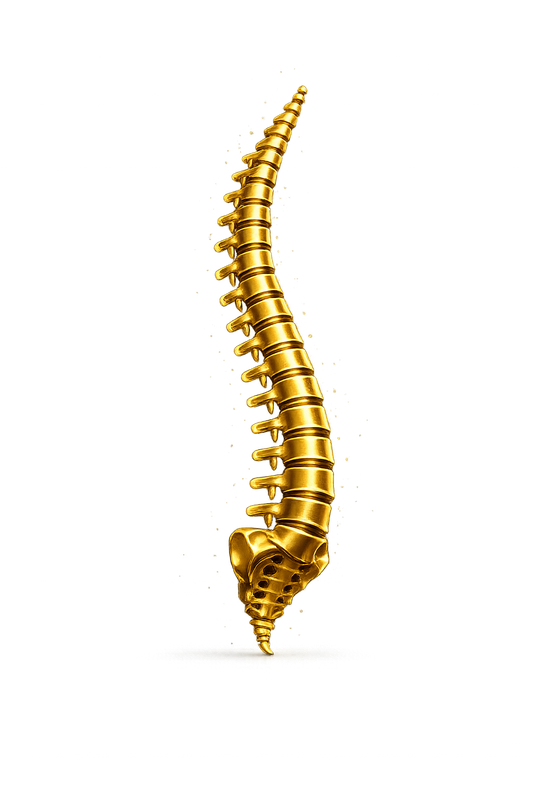
Disc Replacement
Artificial disc replacement is a surgical option for selected patients with a damaged spinal disc. Instead of fusing two vertebrae together, the worn disc is removed and a small, movable implant takes its place — preserving motion at that level of the spine.

Who it's for
Disc replacement is considered for adults with a single damaged disc — most often in the neck (cervical spine), and in selected cases the lower back (lumbar spine) — when conservative care has not relieved symptoms. The ideal candidate has a focal disc problem causing arm or leg pain, healthy bone density, good alignment, and no significant arthritis at the adjacent facet joints. It is generally not appropriate for patients with severe multi-level degeneration, significant osteoporosis, large bone spurs, prior fusion at the same level, or active infection.
How the procedure works
For cervical disc replacement, an incision is made at the front of the neck. The damaged disc is removed and the space is carefully prepared. A motion-preserving implant — typically a metal and polymer device — is placed into the disc space. The implant is sized to fit, and most operations involve one disc level, occasionally two. Surgery usually takes about 1 to 2 hours.
What to expect
Most patients spend one night in the hospital and many cervical disc replacements are now performed as outpatient procedures. The incision is small. Most patients are walking the same day and back to light daily activity within a week or two. Driving usually resumes within 1–2 weeks once off opioid pain medication. Office work resumes around 1–2 weeks; physical jobs typically 4–6 weeks. Heavy lifting and contact sports are restricted longer. Physical therapy starts in the first few weeks.
Risks
As with any spine surgery, risks include bleeding, infection, blood clots, dural tear, hoarseness or swallowing difficulty (for cervical approaches), and the rare possibility of nerve injury. Implant-specific issues include device migration, wear over time, and the need for revision surgery. Long-term studies of cervical disc replacement show outcomes comparable to fusion at 5–10 years, with potentially less stress on the adjacent levels.
Alternatives
The main alternative is fusion (ACDF for the neck, lumbar fusion for the lower back), which joins the two vertebrae into one solid piece of bone. Fusion is appropriate when motion preservation is not feasible — for example with severe arthritis, instability, or multi-level disease. Non-surgical alternatives include continued physical therapy, medication management, and targeted injections.
When to schedule a consultation
Consider a consultation if you have persistent arm or leg pain from a confirmed disc problem despite 6–12 weeks of structured non-surgical care, and you want to discuss whether motion-preserving disc replacement is an option for your specific anatomy.
Considering disc replacement?
Dr. Kwan reviews your imaging and exam to determine if you're a candidate.
Sources
- American Association of Neurological Surgeons. Artificial Disc Replacement. aans.org
- OrthoInfo (American Academy of Orthopaedic Surgeons). Cervical Disk Replacement. orthoinfo.aaos.org
- Mayo Clinic. Spine surgery — Overview of options. mayoclinic.org
- North American Spine Society. KnowYourBack — Cervical Disc Replacement. spine.org
- Cleveland Clinic. Artificial Disk Replacement. my.clevelandclinic.org